
Introduction
Selecting between C1S and C2S art board affects more than surface appearance: it influences print quality, finishing options, durability, and production cost. While both are premium paperboards used for packaging and marketing materials, the difference in coating on one side or both sides changes how each performs in real projects. This article explains what C1S and C2S mean, how they compare in printing, converting, and visual presentation, and when each option makes the most sense. By the end, you’ll have a clearer basis for choosing the board that fits your design goals, budget, and packaging or print application.
Why Choosing the Right Art Board Matters
Art board is a premium paperboard known for its exceptionally smooth surface, excellent stiffness, and reliable converting performance. It serves as the go-to material for luxury packaging, cosmetic boxes, and high-end marketing collateral where first impressions are everything. Because it provides such a clean, bright canvas, brands rely on it to make their colors pop and their packaging feel substantial in the consumer’s hands.
Getting the right paperboard isn’t just about picking the thickest sheet available; it is about matching the specific coating to the project at hand. A mismatch can lead to cracking on the folding lines, poor ink holdout, or simply a wasted budget. Understanding the core variations in art board ensures that your packaging not only looks phenomenal but also survives the manufacturing and shipping processes intact.
What C1S and C2S Art Board Mean
In the packaging and printing industry, the terms C1S and C2S refer to the specific coating applications on the paperboard. C1S stands for Coated One Side. It features a smooth, clay-coated top layer optimized for high-resolution printing, while the reverse side remains entirely uncoated. This uncoated side has a rougher, more natural texture. On the flip side, C2S means Coated Two Sides. Both surfaces receive the same premium clay coating treatment, allowing for vivid, full-color printing on both the front and the back. Typical grammages for both of these boards range from 200 GSM up to 400 GSM, giving buyers plenty of options depending on the rigidity a project demands.
Where the Choice Affects Print Results
The presence of a coating directly impacts how ink sits on the paper. Coated surfaces prevent liquid ink from soaking deep into the paper fibers, resulting in sharper halftone dots and much brighter colors. If you try to print a high-resolution photograph on the uncoated side of a C1S board, the ink will absorb rapidly, looking dull and washed out. Post-press operations are equally affected. C1S is heavily preferred for folding cartons because the uncoated back easily accepts standard water-based adhesives. In fact, gluing an uncoated surface provides a secure bond that holds up to 50% better than attempting to glue a glossy, coated surface. Conversely, C2S art paperboard is the absolute champion for brochures or premium hang tags where both sides face the consumer and require identical visual fidelity.
How C1S and C2S Art Board Compare
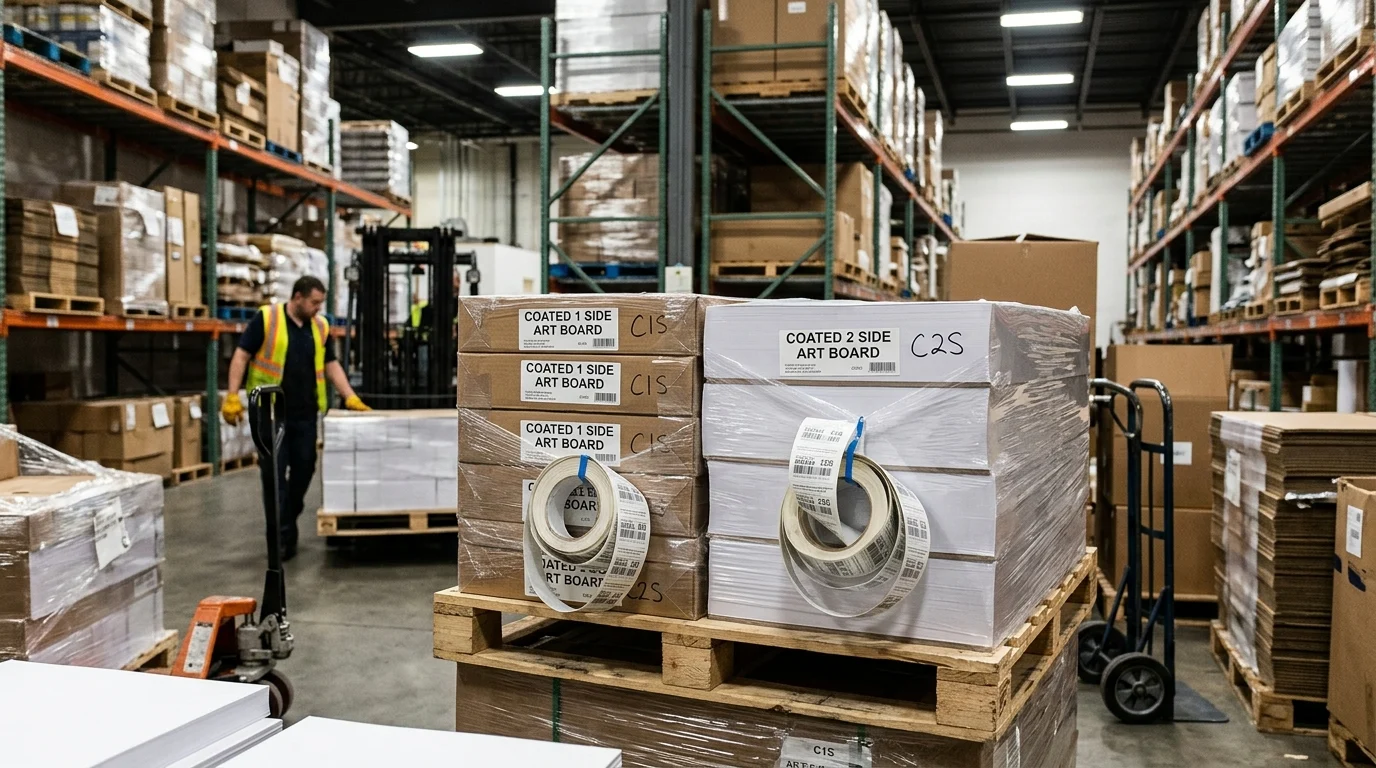
When evaluating these two premium paperboards, it helps to look under the hood. While they might seem identical at a glance, the physical and chemical differences between single and double coatings dictate how they behave on the press and on the retail shelf.
Differences in Coating, Printability, and Stiffness
The most noticeable difference lies in the surface finish and overall printability. Because C2S has clay coatings on both sides, it delivers a uniform gloss level—typically ranging from 70% to 80%—on every printable inch. This makes it perfect for projects needing double-sided vibrancy. However, this extra coating adds density. For a given weight, say 300 GSM, C1S actually offers slightly better stiffness and caliper thickness because more of its weight comes from raw wood pulp fibers rather than heavy clay. This makes C1S highly resistant to cracking during deep embossing or complex die-cutting. Buyers looking for maximum rigidity without extra weight often lean toward C1S, while those prioritizing a luxurious feel on every surface opt for C2S Hi-bulk art paper. Keep in mind that applying a second coating generally increases the manufacturing cost, making C2S about 10% to 15% more expensive than its single-coated counterpart.
Comparison Table for Buyers
To make the decision easier, here is a quick breakdown of how these two art boards stack up against each other in real-world applications.
| Feature | C1S (Coated One Side) | C2S (Coated Two Sides) |
|---|---|---|
| Coating | Single side clay-coated | Dual side clay-coated |
| Typical GSM Range | 200 to 400 GSM | 200 to 400 GSM |
| Gluing Efficiency | Excellent (uncoated back) | Moderate (special glue needed) |
| Relative Cost | Baseline | 10% to 15% higher |
| Best Applications | Folding cartons, labels, boxes | Brochures, tags, greeting cards |
Which Art Board Best Fits Your Printing Needs

Knowing the specs is only half the battle. The real challenge is confidently selecting the right art board for an upcoming production run. Making the right call ensures production efficiency and limits expensive waste on the factory floor.
Step-by-Step Buying Process
Start by evaluating the artwork layout. If the design features full-color graphics on the outside but leaves the inside blank—or only requires simple, single-color text—C1S is the most cost-effective route. Next, look at the structural design. Projects requiring heavy folding, scoring, or high-speed automated gluing perform best with an uncoated back to grip the adhesive, which can reduce production scrap rates by 3% to 5%. Finally, map out the procurement logistics. Standard wholesale orders for custom art board runs often carry a Minimum Order Quantity (MOQ) of 5 to 10 metric tons. If you are sourcing for a massive packaging rollout, the cost savings of choosing C1S over C2S translate into thousands of dollars kept in your pocket without sacrificing exterior quality.
Practical Decision Tips
A good rule of thumb is to let the final product’s function dictate the material.
Key Takeaways
- The most important conclusions and rationale for Art Board
- Specs, compliance, and risk checks worth validating before you commit
- Practical next steps and caveats readers can apply immediately
Frequently Asked Questions
What is the main difference between C1S and C2S art board?
C1S is coated on one side only, while C2S is coated on both sides. Choose C1S for one-sided print and easier gluing; choose C2S when both sides need sharp, vibrant graphics.
Which art board is better for folding cartons?
C1S is usually better for folding cartons. Its uncoated back accepts water-based adhesives well and often provides stronger bonding during box making.
When should I choose C2S art board?
Choose C2S for brochures, hang tags, inserts, or premium packaging where both front and back are visible and need the same print quality and gloss.
Does C2S art board cost more than C1S?
Yes. C2S typically costs about 10% to 15% more because both sides are coated. Use it only when double-sided presentation justifies the extra budget.
Can Bincheng Paper supply different GSM options for art board?
Yes. Bincheng Paper art board commonly comes in 200 to 400 GSM, letting you match stiffness and thickness to packaging, cards, or print display needs.
Post time: Apr-28-2026