
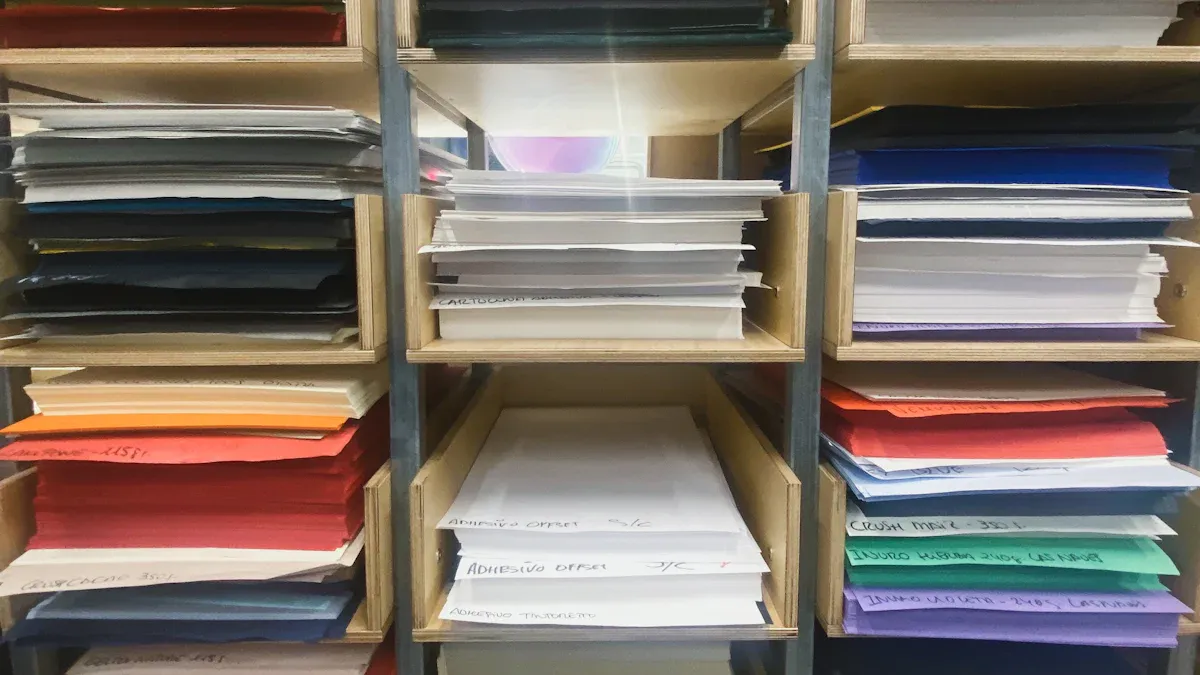
The global offset paper market currently stands at an impressive value of USD 3.48 billion in 2025, with projections indicating it could soar to USD 13.05 billion by 2035. This growth highlights the importance of understanding supply and demand trends. Factors like the rise of eco-friendly inks and the expanding packaging industry are shaping the future of offset paper and offset paper printing paper, particularly the demand for high whiteness offset paper.
Key Takeaways
- The global offset paper market is projected to grow from USD 10 billion in 2023 to USD 13.05 billion by 2035, driven by demand in publishing and packaging.
- Sustainability initiatives are crucial for copy paper manufacturers, as eco-friendly practices enhance competitiveness and meet consumer demand for greener products.
- Digital transformation poses challenges for the copy paper market, but demand remains strong in sectors like education and business, highlighting the need for balance between digital and traditional media.
Market Size and Growth Forecasts for Offset Paper

Current Market Size
The global offset paper market is currently valued at around USD 10 billion in 2023. This figure reflects the strong demand for offset paper across various sectors, including publishing and commercial printing. The market’s growth is driven by several factors, such as the ongoing need for high-quality printed materials and the resilience of the packaging industry.
Key regions contributing to this market include:
- Asia Pacific: This region is projected to be the largest and fastest-growing market for offset papers, with significant contributions from countries like China, India, and Japan.
- North America: Known for its well-established publishing industry, North America plays a crucial role in the offset paper market, emphasizing sustainable practices.
- Europe: This region also holds importance, particularly in the publishing and packaging sectors.
Growth Projections
Looking ahead, the offset paper market is expected to experience substantial growth. Analysts project a compound annual growth rate (CAGR) of 3.80% from 2023 to 2030. By 2030, the market size could reach USD 12 billion.
Furthermore, from 2026 to 2035, the market is anticipated to grow even more rapidly, with a CAGR of 14.13%. This growth trajectory suggests that the market size could increase from USD 3.97 billion in 2026 to an impressive USD 13.05 billion by 2035.
Several factors are expected to drive this growth:
- Ongoing demand for paper-based products in educational and commercial sectors.
- Expansion of the print advertising industry.
- Rising literacy rates and government initiatives in developing nations.
- Cost-efficiency of the offset printing process for high-volume print runs.
- Environmental regulations promoting the use of recycled paper.
- Technological innovations enhancing product quality and operational efficiency.
- Resilience of the packaging and labeling industry supporting offset paper.
These trends indicate a bright future for the offset paper market, making it an exciting area for stakeholders to watch.
Key Trends Influencing Supply and Demand for Copy Paper

Digital Transformation Impact
Digital transformation significantly reshapes the landscape for copy paper. As businesses and educational institutions increasingly adopt electronic documentation and communication tools, the demand for traditional paper products faces challenges.
Key Points:
- The global shift towards digitalization poses a significant challenge to the copy paper market.
- Many businesses now prioritize efficiency through electronic documentation.
- Despite this trend, there remains a persistent need for printed materials, especially in educational and business sectors.
- Regions where digital transformation is gradual still sustain demand for copy paper.
| Evidence | Description |
|---|---|
| Digital Shift | The global shift towards digitalization poses a significant challenge to the copy paper market. |
| Demand Decline | This trend may lead to a gradual decline in demand for copy paper, particularly in developed regions. |
Technological advancements in printing also play a role. New, efficient printers and copiers still require reliable paper input, ensuring that copy paper remains relevant in the market.
| Evidence Type | Description |
|---|---|
| Technological Advancements in Printing | Development of more efficient and high-quality printers and copiers that still necessitate reliable paper input. |
Sustainability Initiatives
Sustainability initiatives are becoming crucial for copy paper manufacturers. Companies are adopting eco-friendly solutions to reduce their carbon footprints and improve resource efficiency. This shift not only meets consumer demand for greener products but also enhances market competitiveness.
Notable Initiatives:
- Companies are developing recyclable packaging materials.
- Sustainability initiatives are seen as a way to enhance market leadership.
| Initiative | Description |
|---|---|
| Eco-friendly solutions | Companies are adopting innovative technologies to reduce carbon footprints and improve resource efficiency. |
| Renewable packaging | Development of recyclable packaging materials is a key focus area. |
For instance, NORPAC emphasizes that sustainability is integral to their operations, influencing their manufacturing processes and community involvement. Additionally, Monadnock Paper Mills ensures all their products meet Forest Stewardship Council® (FSC) standards, reflecting a commitment to responsible sourcing.
Environmental regulations also impact the supply and demand for copy paper. Businesses are increasingly suspending sourcing from suppliers that engage in unsustainable practices. This shift affects supply chains, potentially reducing availability.
Environmental Concerns:
- Deforestation and habitat destruction are major issues linked to the paper industry.
- Increased scrutiny and regulatory actions can affect paper supply.
- The need for greener alternatives and enhanced recycling efforts is emphasized as a response to these challenges.
Market Dynamics of Offset Paper
Drivers of Demand
Several factors drive the demand for offset paper in the publishing and printing industries. The commercial printing segment leads the way, fueled by the need for corporate marketing materials, textbooks, and promotional print. Innovations in high-speed offset presses and ink formulations have significantly improved printing efficiency.
The demand for high-quality printed materials in the publishing sector remains strong. Despite the rise of digital media, printed publications like books and magazines continue to be essential, especially in areas where print is the primary source of information.
Key drivers include:
- Rising demand from commercial printing and publishing.
- Technological advancements in offset printing.
Challenges Facing Supply
While demand for offset paper grows, several challenges impact its supply. Shortages of essential supplies, such as cartons and pallets, create hurdles for manufacturers. Increased transportation costs due to a shortage of trucks and drivers further complicate the situation.
Here are some key challenges:
- Raw material availability, especially wood pulp and recycled fibers, is crucial for offset paper production.
- Regional forestry policies and environmental regulations affect the availability of these raw materials.
- The COVID-19 pandemic has caused shipping limitations, impacting both raw material and paper supply.
Additionally, inflation and labor shortages contribute to production delays. These factors have led to a rise in paper prices, with increases of up to 15% reported due to ongoing supply chain issues.
Regional Insights on Offset and Copy Paper
North America Trends
In North America, the offset paper market is evolving due to several key trends. Producers are increasingly focusing on eco-friendly processes. They redirect investments toward packaging grades and specialty papers. This shift stabilizes offset demand through 2030, even as traditional print volumes decline.
Here are some notable trends:
- Environmental compliance costs are rising.
- Competition from imports is affecting local markets.
- Low-margin commodity assets are becoming more vulnerable.
| Trend Description | Evidence |
|---|---|
| Shift in Demand | Packaging and specialty applications are stabilizing offset demand through 2030. |
| Investment Focus | Producers are redirecting investment toward packaging grades and specialty papers. |
European Market Developments
The European market is undergoing significant changes. Digital advancements and sustainability demands drive these transformations. As businesses rely more on digital communication, the need for traditional paper products decreases. Manufacturers must innovate in eco-friendly production methods to stay competitive.
| Aspect | Details |
|---|---|
| Market Trend | Strong shift towards eco-friendly and sustainable practices in the European commercial printing market. |
| Regulatory Compliance | Essential for maintaining competitiveness due to stricter environmental regulations. |
| Sustainable Materials Adoption | Increased investment in biodegradable paper and eco-friendly inks for better recyclability. |
Asia-Pacific Growth Factors
In the Asia-Pacific region, growth in the offset and copy paper market is robust. Rising demand from both households and industries fuels this expansion. Key countries like China, Japan, and Indonesia play vital roles in shaping market dynamics.
Key growth factors include:
- Significant intra-regional trade links supply hubs to import-reliant countries.
- Pricing trends and production efficiency impact supply.
- Regulatory standards are evolving, affecting market operations.
This region’s diverse needs and economic growth contribute to a vibrant market for offset paper and copy paper.
The global offset and copy paper markets show promising growth driven by technological advancements and sustainability trends. Key findings reveal that despite digitalization challenges, demand for high-quality printed materials remains strong.
Stakeholder Implications:
- Embrace sustainable practices to meet consumer demands.
- Adapt to market changes to stay competitive.
- Invest in innovative technologies for future growth.
As the market evolves, companies prioritizing eco-friendly solutions and automation will likely attract more investments.
FAQ
What is offset paper used for?
Offset paper is commonly used for printing books, magazines, brochures, and other high-quality printed materials.
How does digital transformation affect copy paper demand?
Digital transformation reduces the need for printed documents, but demand remains strong in education and business sectors.
What are the sustainability initiatives in the paper industry?
Many companies focus on eco-friendly practices, such as using recycled materials and reducing carbon footprints in production.
Post time: Feb-27-2026