

When it comes to luxury packaging, GSM, bulk, and whiteness play crucial roles. These factors directly influence the quality and presentation of products. For instance, a High Bulk Ivory Board can enhance the perceived value of a brand. Similarly, the brightness of C1S Ivory Board contributes to an eye-catching display that attracts customers. Additionally, NINGBO FOLD techniques can be effectively utilized with these premium materials to create stunning packaging solutions.
Key Takeaways
- GSM, or grams per square meter, is crucial for determining the thickness and durability of packaging materials. Higher GSM values enhance product protection and create a premium feel.
- Bulk affects the tactile experience of packaging. High bulk materials signal quality and exclusivity, making products feel more luxurious in customers’ hands.
- Whiteness enhances visual appeal and print quality. A brighter surface makes designs pop, attracting customers and elevating brand perception.
Understanding GSM

GSM, or grams per square meter, is a key metric in the world of paper and packaging. It measures the weight of paper based on a surface area of one square meter. This measurement helps manufacturers and designers understand the thickness and durability of the material they are working with.
Here’s a quick breakdown of what GSM means:
- Higher GSM values typically indicate thicker and more durable paper.
- Lower GSM values suggest lighter and more flexible materials.
When it comes to luxury packaging, GSM plays a significant role in how a product feels and performs. For instance, higher GSM values often lead to sturdier materials that enhance product protection. Thicker packaging materials contribute to a premium tactile experience, making the unboxing feel special.
Take a look at this table to see how different GSM values correspond to various material types:
| GSM Value | PT Equivalent | Material Type | Description |
|---|---|---|---|
| 270 GSM | 14 PT | Uncoated Stock | Natural feel, good for soft, matte appearance. |
| 350 GSM | 16 PT | C2S/SBS | Smooth finish, high-quality surface for luxury packaging. |
| 400 GSM | 18 PT | Glossy Card Stock | High-end feel with polished finish, ideal for impactful packaging. |
Higher GSM values not only improve durability but also enhance the overall presentation of the packaging. Luxury brands often consider several factors when selecting GSM specifications for their packaging materials:
- Product Weight and Fragility: Heavier items require higher GSM for better support.
- Intended Use: Higher GSM is ideal for shipping, while lower GSM may work for retail displays.
- Environmental Factors: Thicker materials resist moisture and tearing, making them suitable for harsh conditions.
- Cost vs. Quality: Brands must balance budget constraints with the need for durability.
- Testing Options: Conducting tests and requesting samples ensures the selected GSM meets expectations.
The Role of Bulk
Bulk refers to the thickness and density of packaging materials. It plays a significant role in luxury packaging, influencing both the tactile experience and the perceived value of products. When consumers interact with packaging, they often gauge quality based on how it feels in their hands.
Here are some key aspects of how bulk affects luxury packaging:
- Materials: High-end materials like thick cardstock and soft-touch coatings enhance the sensory experience.
- Tactile sensations: Features like soft-touch coatings and embossed patterns create memorable tactile experiences.
- Weight and texture: The weight and texture of packaging signal quality and exclusivity, influencing perceived value.
Luxury packaging evokes a sense of quality and craftsmanship. Tactile experiences lead to stronger emotional connections with the brand. Consumers often associate sensory experiences with product value. When customers hold a well-crafted package, they subconsciously link the tactile sensations to the product’s price and overall worth.
Bulk also affects printability and finishing options. Higher bulk materials allow for better ink absorption and more vibrant colors. This is crucial for brands that want their packaging to stand out on the shelf. Here’s a quick look at some benefits of bulk in luxury packaging:
| Benefit | Explanation |
|---|---|
| Economies of Scale | Higher quantities reduce the cost per unit due to fixed printing setup costs. |
| Consistency Across Batches | Large orders ensure uniformity in ink, paper, and finishing, enhancing overall quality. |
| Stock Management | Bulk orders improve inventory control, preventing stockouts and ensuring timely production. |
However, there are trade-offs to consider. While high bulk can enhance the overall quality, it may also lead to higher material costs. Here’s a comparison of bulk packaging versus unit dose packaging:
| Aspect | Bulk Packaging | Unit Dose Packaging |
|---|---|---|
| Material Costs | Lower due to economies of scale | Higher by 15-25% |
| Labor Efficiency | Less efficient | More efficient, net savings of 12-28% |
| Quality Control | Standard | Improved quality control |
| Regulatory Compliance | Basic compliance | Enhanced compliance |
| Market Positioning Advantages | Limited | Premium pricing opportunities |
Importance of Whiteness

Whiteness plays a vital role in luxury packaging. It affects how products look and how customers perceive them. A bright, clean appearance can elevate a brand’s image and attract more buyers. When brands choose ivory board, they often look for materials that meet high standards of whiteness.
Here are some key reasons why whiteness matters:
- Visual Appeal: Increased whiteness enhances the vibrancy of printed colors. This makes designs pop and captures attention.
- Brand Perception: A bright surface signals quality. Customers often associate high whiteness with premium products, influencing their buying decisions.
- Printability: Whiter boards offer excellent printability. This means brands can achieve sharp, clear images and text, which is crucial for luxury packaging.
Luxury brands often specify whiteness requirements for their packaging materials. They seek options like Pure Performance™ liners, which come in various weights and ensure high whiteness. These liners feature a three-ply construction that enhances strength and smoothness, essential for maintaining the integrity of luxury packaging.
To measure whiteness, the industry uses several methods. Here’s a quick look at two common measurement techniques:
| Measurement Method | Description |
|---|---|
| ISO Whiteness Scale | Measures light reflectance in the blue region (457 nm); higher values indicate whiter paper. |
| CIE Whiteness Index | Considers a broader range of wavelengths for a comprehensive measure of whiteness, accounting for color balance and lighting conditions. |
C1S Ivory Board Overview
C1S Ivory Board stands out in the world of luxury packaging due to its unique features. This board is made from 100% virgin wood pulp, ensuring high purity and quality. Its single-sided coating makes it perfect for applications where only one side is visible. This design not only enhances cost-effectiveness but also provides a high-quality printing surface.
Many brands use C1S Ivory Board for packaging pharmaceuticals, cosmetics, and food products, although it should not come into direct contact with food. Its bright white coated surface allows for vibrant graphics, making it ideal for luxury packaging. The board’s smooth texture ensures excellent printability, which is essential for creating eye-catching designs.
Here are some key benefits of using C1S Ivory Board:
- Versatility: This board is perfect for high-end packaging, luxury gift boxes, and premium business cards.
- Durability: C1S Ivory Board offers excellent strength, making it suitable for protecting valuable products.
- Print Quality: The board supports various post-print processes like hot stamping and embossing, enhancing the overall appeal.
When comparing C1S Ivory Board to other materials, it excels in GSM, bulk, and whiteness. Standard weights range from 80gsm for lighter applications to over 300gsm for premium covers. This makes it a reliable choice for brands looking to elevate their packaging game.
Comparing Options
When choosing the right ivory board for luxury packaging, brands often face a variety of options. Each type of board has unique characteristics that can affect the final product’s appearance and durability. Here’s a quick comparison of some popular ivory board types:
| Product Type | Whiteness | Basic Weight (GSM) | Thickness (mm) | Bulk |
|---|---|---|---|---|
| Ultra high bulk ivory board | ≥90 % ±2.0 | 255, 300, 350, 400 | 415, 490, 555 | 1.63 |
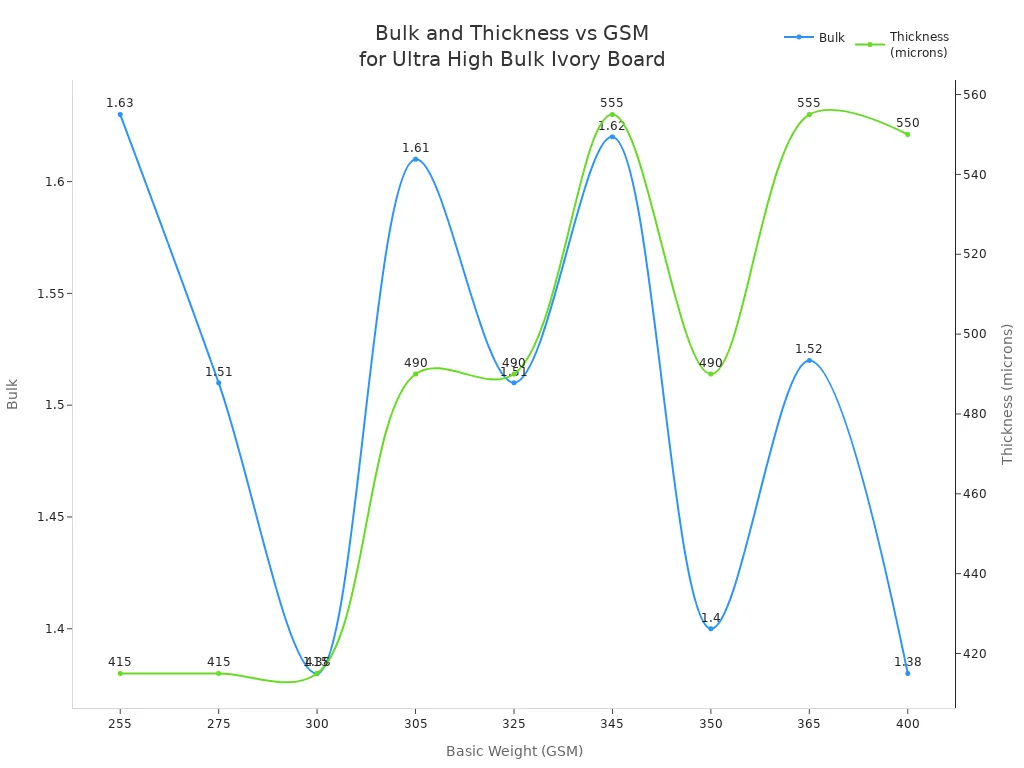
Brands should consider several factors when comparing options:
- GSM Range: Most ivory boards fall between 230 and 400 GSM. Higher GSM often means better durability.
- Whiteness Level: A higher whiteness level enhances print clarity and visual appeal. Brands often seek boards with very high whiteness for luxury packaging.
- Surface Smoothness: Smooth surfaces ensure excellent printability, which is crucial for vibrant designs.
Tip: Always request samples to evaluate the look and feel of different boards. This hands-on approach helps brands make informed decisions.
Ultimately, the choice of ivory board should align with the brand’s values, aesthetic goals, and functional requirements. By weighing these factors, brands can select the perfect ivory board that enhances their luxury packaging.
Choosing the right ivory board for luxury packaging hinges on three key factors: GSM, bulk, and whiteness. These elements significantly impact the quality and appeal of the final product. Consider these points:
- GSM ensures durability and a premium feel.
- Bulk enhances the tactile experience, signaling quality.
- Whiteness boosts visual appeal, especially for high-end items.
As the market evolves, trends indicate a projected growth of 7%-9% by 2026, driven by innovations in packaging materials. Brands must prioritize these factors to meet buyer expectations and maintain a competitive edge.
| Metric | Details |
|---|---|
| Projected CAGR | 7%-9% by 2026, driven by demand in food, beverage, and medical packaging. |
| Key Innovations | Advanced lamination techniques, hybrid barrier layers, and lightweight materials are emerging. |
| Buyer Expectations | Focus on quality, performance, and compliance with certifications like FSC, FDA, and ISO. |
By understanding and leveraging GSM, bulk, and whiteness, brands can elevate their luxury packaging and create lasting impressions.
FAQ
What is GSM in ivory board?
GSM stands for grams per square meter. It measures the weight and thickness of the ivory board.
Why is whiteness important in luxury packaging?
Whiteness enhances visual appeal and print quality, making products look more attractive to customers.
How does bulk affect packaging?
Bulk influences the tactile experience and perceived value, making the packaging feel more premium and sturdy.
Post time: Apr-08-2026