
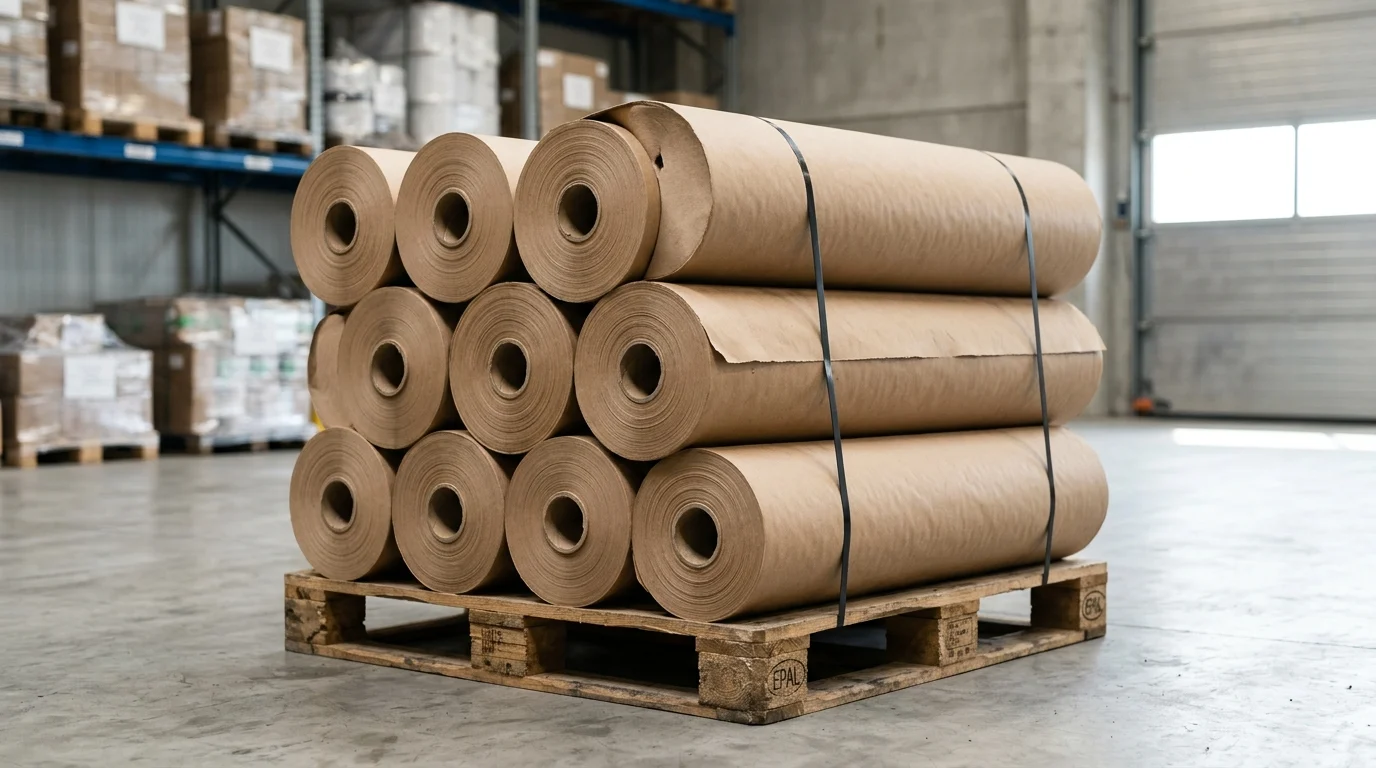
Risks of Choosing the Wrong Kraft Paper Rolls
Procuring the correct material for large-scale packaging operations is critical for maintaining product integrity and operational efficiency. When converters and manufacturers source b2b bulk kraft paper rolls, failing to distinguish between food-grade and industrial specifications can lead to severe financial and legal repercussions. The risks range from compromised structural integrity during logistics to regulatory penalties if hazardous chemicals leach into consumable goods. Understanding the fundamental differences in fiber composition and manufacturing hygiene is the first line of defense against costly procurement errors.
Food-Grade vs Industrial Kraft Paper
Food-grade kraft paper is traditionally manufactured from virgin softwood pulp under strict hygiene controls, ensuring it is free from toxic chemicals, heavy metals, and optical brighteners. In contrast, industrial kraft paper often incorporates high-strength recycled fibers. While recycled content lowers costs and promotes sustainability, uncertified recycled paper introduces the risk of unknown contaminants such as residual inks or adhesives. However, the dichotomy is not absolute: recycled-fiber kraft can legally be used for food contact if it meets strict migration limits under recognized frameworks like FDA rules or EC 1935/2004. Additionally, the market extends beyond this simple binary; many B2B buyers require barrier functionality, utilizing coated, laminated, or grease-resistant kraft grades (such as PE-coated or fluorine-free greaseproof papers) to meet specific packaging demands.
Using non-certified industrial-grade paper for food contact can result in costly product recalls, leading to significant direct losses, legal fees, and permanent brand damage. Furthermore, uncertified industrial grades carry a higher risk of chemical migration when improperly subjected to the rigorous cleanliness standards required for direct food packaging.
Common B2B Bulk Use Cases
The downstream application strictly dictates the required paper grade. Industrial kraft is ideal for corrugated box liners, pallet wrapping, void fill, and heavy-duty building material sacks. These applications prioritize tear resistance, stiffness, and load-bearing capacity over chemical purity. Conversely, food-grade paper is essential for grocery bags, fast-food wrappers, and direct-contact agricultural sacks where consumer safety is paramount. In both categories, the physical format remains massive to support continuous high-speed converting. Typical jumbo rolls supplied to converters frequently exceed 1,500 mm in width and can weigh well over 1,000 kg. Handling materials of this scale requires specialized clamp trucks and robust unwinding stands on the production floor, making any return of incorrect material a significant logistical burden.
Key Specifications Buyers Should Compare
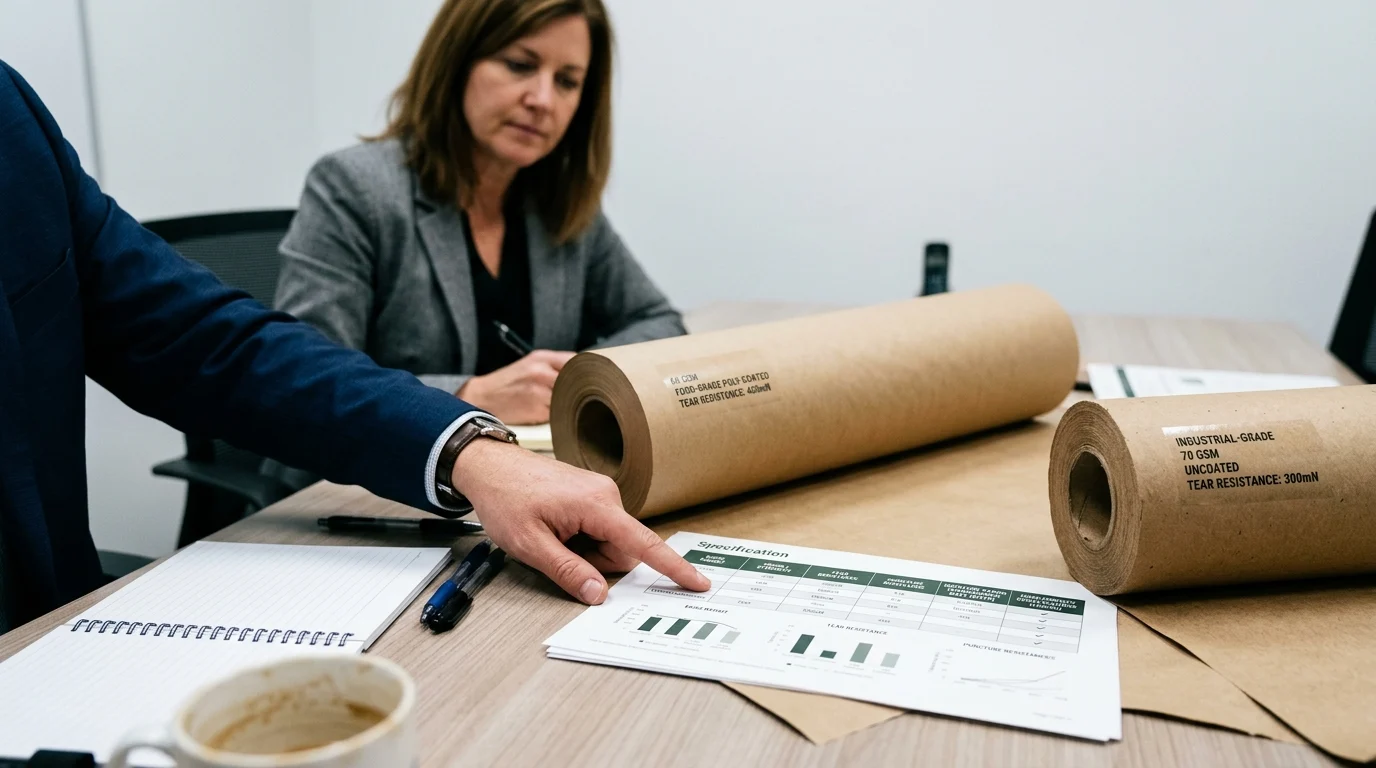
Evaluating technical specifications ensures that the chosen kraft paper will perform reliably on high-speed converting machinery. Buyers must look beyond basic pricing and deeply analyze the structural and chemical properties of the paper to guarantee it meets their specific end-use requirements. A mismatch in physical properties can lead to excessive web breaks, while a failure in chemical compliance can halt production entirely.
Basis Weight, Caliper, and Tensile Strength
Basis weight, or grammage, typically dictates the paper’s primary application and structural yield. Lightweight wrapping grades generally start around an estimated 50 gsm, while heavy-duty sack grades designed for cement or agricultural feed can easily exceed 150 gsm. Caliper (thickness) uniformity across the entire web is equally vital; variations of even a few microns can cause uneven tension, leading to web breaks and costly machine downtime. Tensile strength and tear resistance, commonly measured via the Elmendorf tear test in both machine direction (MD) and cross direction (CD), determine how well the final packaging will withstand rough handling.
| Specification | Food-Grade Kraft Paper | Industrial Kraft Paper |
|---|---|---|
| Primary Fiber Source | 100% Virgin Softwood Pulp | Virgin or Recycled Blend |
| Typical Grammage Range | 50 gsm – 120 gsm | 70 gsm – 150+ gsm |
| Chemical Additives | Strictly Regulated (FDA/EU) | Standard Sizing/Strength Agents |
| Surface Cleanliness | Optical Brighteners Often Restricted | May Contain Recycled Specks |
| Typical Cost Premium | Varies by mill/region | Baseline Commodity Cost |
Food Contact Suitability and Compliance
For packaging that touches consumables, regulatory compliance is absolutely non-negotiable. Suppliers must provide comprehensive documentation proving adherence to global standards, such as US FDA 21 CFR 176.170 for aqueous and fatty foods, or the equivalent European framework regulations (EC 1935/2004). It is crucial to note that migration limits and permissible recycled content vary significantly depending on the food type (dry, aqueous, fatty, acidic), contact time and temperature, and whether the paper serves as the final direct-contact packaging or an outer wrapper. Buyers should always consult the relevant regulations specific to their product.
To verify compliance, buyers should request documentation of overall and specific migration tests (e.g., per EU 10/2011 standards) as well as organoleptic testing to ensure no transfer of odor or taste. This documentation must include rigorous laboratory testing to confirm that the sum of heavy metal concentrations—such as lead, cadmium, mercury, and hexavalent chromium—remains well below the standard 100 ppm threshold for packaging (e.g., EU 94/62/EC). When sourcing kraft paper rolls for sensitive consumer applications, buyers should also verify FSC or PEFC chain-of-custody certifications. This ensures the pulp originates from sustainably managed forests without compromising the chemical safety required for direct food contact.
How to Source B2B Bulk Kraft Paper Rolls
Establishing a reliable supply chain for bulk kraft paper requires rigorous vetting and a structured procurement strategy. Because jumbo rolls function as the structural backbone of downstream packaging operations, selecting the right manufacturing partner is just as important as selecting the right paper grade. A methodical approach minimizes supply chain disruptions and guarantees consistent product quality across multiple production runs.
Supplier Approval and Sample Testing
The first step in supplier approval involves verifying facility quality management systems, specifically looking for active ISO 9001 and ISO 14001 certifications. Beyond certificates, practical vetting should include requesting Certificates of Analysis (COAs) per lot or batch and defining clear claim and return procedures for off-spec jumbo rolls. Once a supplier is vetted on paper, converters must request sample rolls for physical trial runs.
Key Takeaways
- Confirm whether the packaging will touch food directly before selecting kraft paper, because non-certified industrial grades can create migration, recall, and legal risks.
- Request food-contact compliance documents for any food packaging roll, especially when recycled fiber is included in the paper furnish.
- Match the kraft grade to the application: industrial kraft suits pallet wrapping, liners, and heavy-duty sacks, while food-grade kraft is required for grocery bags and direct-contact wrappers.
- Check basis weight, caliper, tensile strength, and barrier properties before purchase to prevent web breaks, poor converting performance, or packaging failure.
- Plan roll handling carefully because bulk kraft paper rolls may exceed 1,500 mm in width and weigh more than 1,000 kg, making incorrect orders costly to return.
- Use coated, laminated, or grease-resistant kraft grades when the package must resist oil, moisture, or heat in food-service applications.
Frequently Asked Questions
What is the main difference between food-grade and industrial kraft paper?
Food-grade kraft paper is made under stricter hygiene controls and must meet food-contact safety requirements. Industrial kraft paper focuses on strength, durability, and cost efficiency for non-food uses such as pallet wrapping, corrugated liners, and building material sacks.
Can recycled kraft paper be used for food packaging?
Yes, but only if it meets recognized food-contact requirements, such as FDA rules or EC 1935/2004 migration limits. Uncertified recycled kraft may contain inks, adhesives, or other contaminants and should not be used for direct food contact.
What should B2B buyers check before ordering bulk kraft paper rolls?
Buyers should verify end-use suitability, food-contact certification, basis weight, caliper, tensile strength, roll width, roll weight, coating type, and converter compatibility. Requesting technical data sheets and compliance documents before purchase helps avoid costly returns.
When is industrial kraft paper the better choice?
Industrial kraft paper is suitable for packaging that prioritizes strength over food safety, including corrugated box liners, pallet protection, void fill, and heavy-duty sacks. It is often more economical for non-direct-contact applications.
Why are wrong bulk kraft paper rolls expensive to return?
Jumbo kraft paper rolls can exceed 1,500 mm in width and weigh over 1,000 kg. Returning or replacing incorrect rolls requires special handling equipment, freight coordination, and production rescheduling, which can quickly increase costs.
Post time: Sep-28-2026