
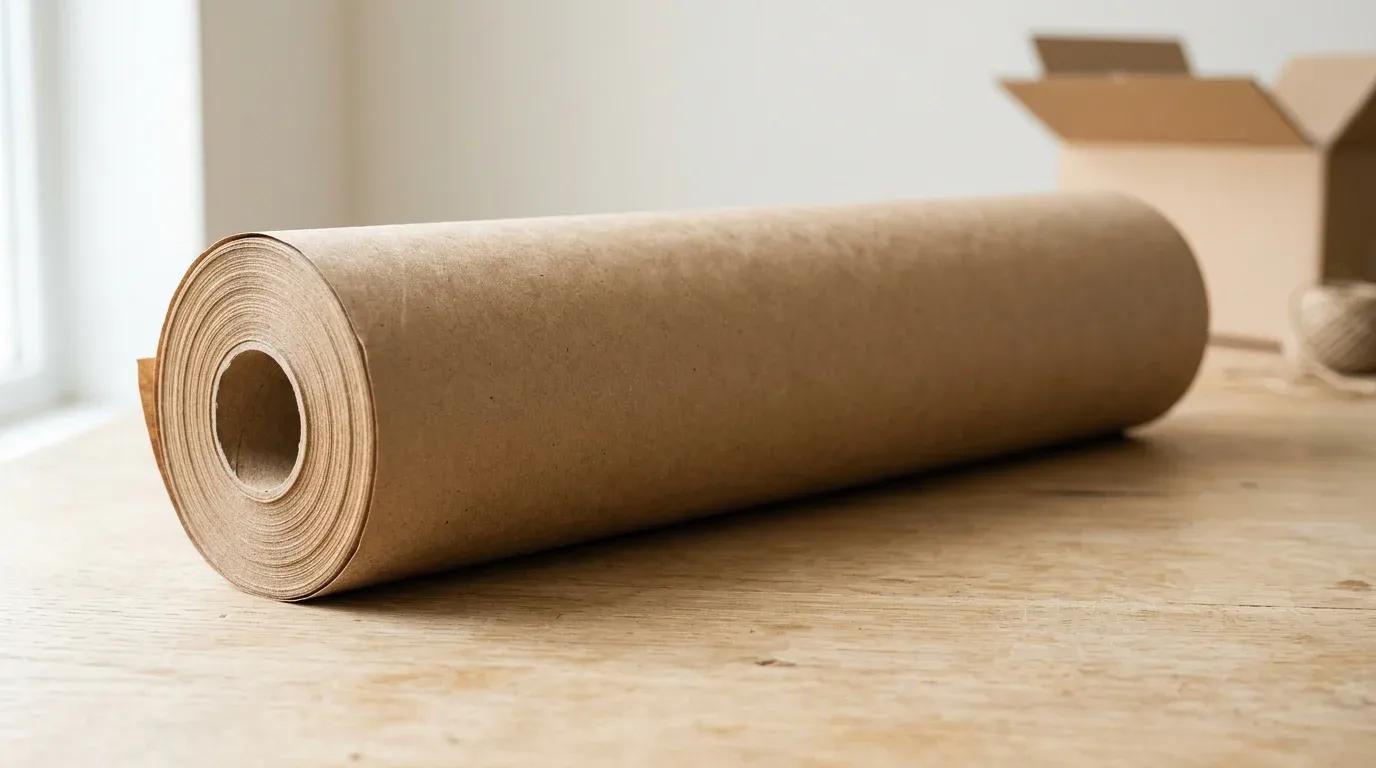
hipping damage rarely comes from one dramatic impact; it often starts with small movements, abrasion, moisture exposure, or poor material selection. That is where kraft paper becomes a practical packaging tool for warehouses, ecommerce teams, and industrial shippers. Available in rolls, sheets, and multiple basis weights, it can wrap products, fill voids, separate surfaces, and stabilize pallet loads without adding excessive freight weight. The key is matching the paper grade to the product, transit environment, and handling risk. This guide explains how buyers should compare kraft paper for shipping, including basis weight, tear resistance, coatings, roll formats, and common applications from light ecommerce packing to heavy-duty bracing.
How Buyers Should Define Kraft Paper for Shipping
Supplied primarily in continuous rolls ranging from 12 to 48 inches wide or as pre-cut sheets, kraft paper provides reliable transit protection for a wide range of inventory. Selecting the right grade minimizes freight costs and reduces transit damage rates. When sourced correctly, kraft paper serves as a lightweight, flexible, and highly adaptable solution for complex shipping requirements.
Core Functions of Shipping Kraft Paper
Kraft paper serves four primary functions: wrapping, immobilization, impact absorption, and surface protection. Lighter grades conform tightly to item contours; applying two to three layers protects moderately fragile goods when secured with packaging tape. When manually or mechanically crumpled, the paper expands to create rigid, compressible dunnage that prevents product migration inside shipping cartons. Flat sheets serve as effective interleaving to separate stacked goods and prevent abrasion, while heavier grades block and brace industrial parts against lateral movement to maintain carton integrity.
Shipping Environments Best Suited for Kraft Paper Rolls
High-volume fulfillment centers rely heavily on kraft paper for ecommerce packaging to rapidly process outbound goods, often utilizing overhead dispensing systems. The material performs exceptionally well in standard, dry warehouses. However, untreated kraft paper degrades when wet and offers no static protection for electronics. Its inherent anti-slip properties also make it highly suitable as a pallet liner, stabilizing heavy loads during aggressive forklift handling and long-haul transportation.
Key Specifications for Comparing Kraft Paper
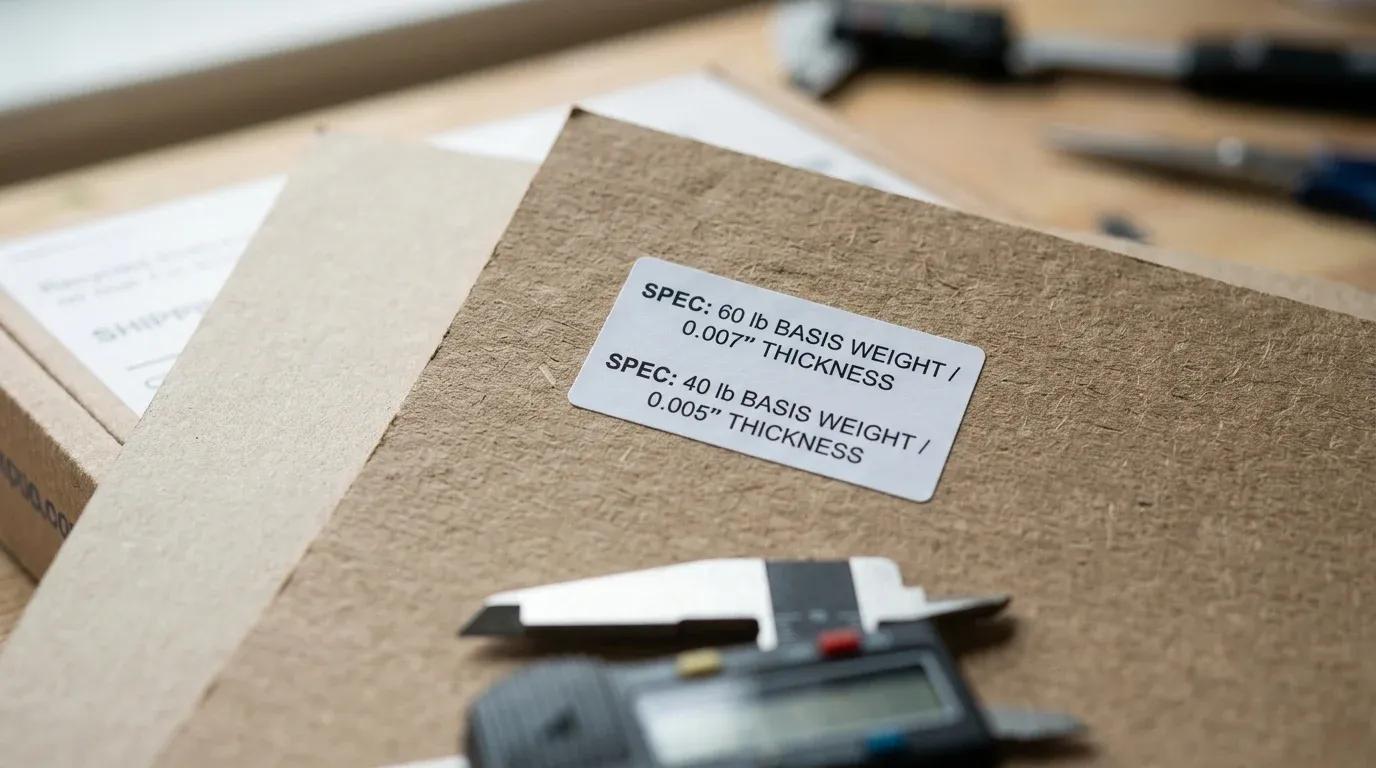
The most critical metric for comparing kraft paper is basis weight—traditionally measured in the North American market as the weight in pounds of a 3,000-square-foot ream. Selecting the correct grade ensures adequate shock absorption and puncture resistance without adding unnecessary mass. Note that paper performance varies significantly with moisture content; high humidity can alter stated weights and reduce structural rigidity.
Basis Weight, Tear Resistance, Elasticity, and Surface Finish
Key performance indicators include tear resistance, elasticity, and surface finish. Lighter grades prioritize flexibility for tight wrapping, while heavier variations offer superior puncture resistance against sharp edges. Standard virgin paper exhibits slight elasticity before tearing, allowing it to conform securely around irregular product geometries. Recycled kraft paper features shorter fibers, resulting in reduced tear resistance. Surface finishes can also be modified for specific cargo profiles. Poly-coated or wax-coated options provide a reliable barrier against grease, motor oil, or moisture ingress, particularly in automotive and aerospace parts distribution.
Comparison Criteria for 30 lb Kraft Paper and Other
Grades
A standard 30 lb paper bag kraft paper roll is highly flexible and cost-effective for light void fill and surface wrapping. In contrast, 50 lb and 70 lb grades are explicitly reserved for demanding blocking and bracing applications. Note: Thickness and burst strength values vary significantly by manufacturer and pulp blend, so testing is recommended.
| Basis Weight | Approx. Thickness & Burst Strength | Primary Logistics Application | When to Avoid |
|---|---|---|---|
| 30 lb | ~0.003″ / 30 psi | Light void fill, surface wrapping | Heavy parts with sharp edges |
| 50 lb | ~0.005″ / 50 psi | Edge protection, box stuffing | Delicate electronics requiring anti-static |
| 70 lb | ~0.007″ / 70 psi | Industrial blocking and bracing | Lightweight void fill (economically inefficient) |
How Operations Should Choose and Apply Kraft Paper
Facilities must evaluate daily parcel throughput to determine whether manual tearing stations or automated dispensing machines yield the highest efficiency. Automated converting systems dispense densely crumpled paper at high speeds, drastically reducing pack times and minimizing repetitive strain injuries associated with manual paper handling.
Step-by-Step Selection Process
- Audit void volume and fragility: Measure average carton void volume and identify the sharpest or heaviest items in the catalog.
- Select basis weight: Use 30 lb paper for items under 5 lbs, 50 lb for items 5–15 lbs, and 70 lb for heavy industrial parts over 15 lbs.
- Determine dispensing method: Install manual tensioned spindles above the packing bench for low-volume stations, or automated crumpling machines for high-volume fulfillment lines.
- Specify coatings: Select untreated paper for standard use, or poly/wax-coated grades if moisture or grease resistance is required.
Cost, Sustainability, and Performance Decision Criteria
Decision criteria balance direct costs, sustainability goals, and physical performance. Crumpled paper is highly economical for void fill, with costs varying based on basis weight and bulk purchasing discounts. Environmentally, untreated virgin or recycled grades offer a biodegradable, curbside-recyclable alternative to synthetic foams. However, poly-coated and wax-coated variants are typically non-recyclable in standard streams—a critical caveat for corporate sustainability claims. Performance-wise, kraft paper must demonstrate consistent tear resistance and reliable cushioning. It is generally inferior to engineered foam when dealing with high vibration sensitivity, extreme drop heights, or delicate surface finishes requiring non-abrasive protection. Understanding these boundaries ensures packaging costs do not increase due to elevated product damage rates during final-mile delivery.
Key Takeaways
- Choose kraft paper rolls from 12 to 48 inches wide when packing operations need flexible, cut-to-length wrapping or high-volume dispensing.
- Use lighter grades such as 30 lb kraft paper for surface wrapping and light void fill, but move to 50 lb or 70 lb grades for blocking, bracing, and sharp-edged parts.
- Apply two to three layers of kraft paper for moderately fragile goods, and secure the wrap with packaging tape to maintain protection in transit.
- Test kraft paper in your actual warehouse humidity conditions because moisture can reduce rigidity and change real-world performance.
- Specify wax-coated or poly-coated kraft paper when shipments face grease, motor oil, or moisture exposure.
- Use kraft paper as a pallet liner when additional friction is needed to reduce load shifting during forklift handling and long-haul transportation.
Frequently Asked Questions
What is the best kraft paper weight for general shipping?
For light wrapping, void fill, and surface protection, 30 lb kraft paper is often sufficient. For sharp, heavy, or irregular items, consider 50 lb or 70 lb grades and test them under real packing conditions.
Is kraft paper better in rolls or sheets?
Rolls are ideal for high-volume packing lines and flexible cut-to-length use, while sheets work well for interleaving, wrapping standardized items, and separating stacked goods. Many shipping operations use both formats.
Can kraft paper protect fragile products during transit?
Yes, when used correctly. Two to three layers can protect moderately fragile items, while crumpled kraft paper can create compressible dunnage that reduces movement inside cartons. Very fragile goods may still need additional cushioning.
Does kraft paper work in humid or wet shipping conditions?
Untreated kraft paper performs best in dry environments and can lose rigidity when exposed to moisture. For grease, oil, or moisture resistance, buyers should consider wax-coated or poly-coated kraft paper options.
What is the difference between virgin and recycled kraft paper?
Virgin kraft paper typically has longer fibers, giving it better tear resistance and elasticity. Recycled kraft paper can be cost-effective and sustainable, but its shorter fibers may reduce strength in demanding transit applications.
Post time: Oct-14-2026