
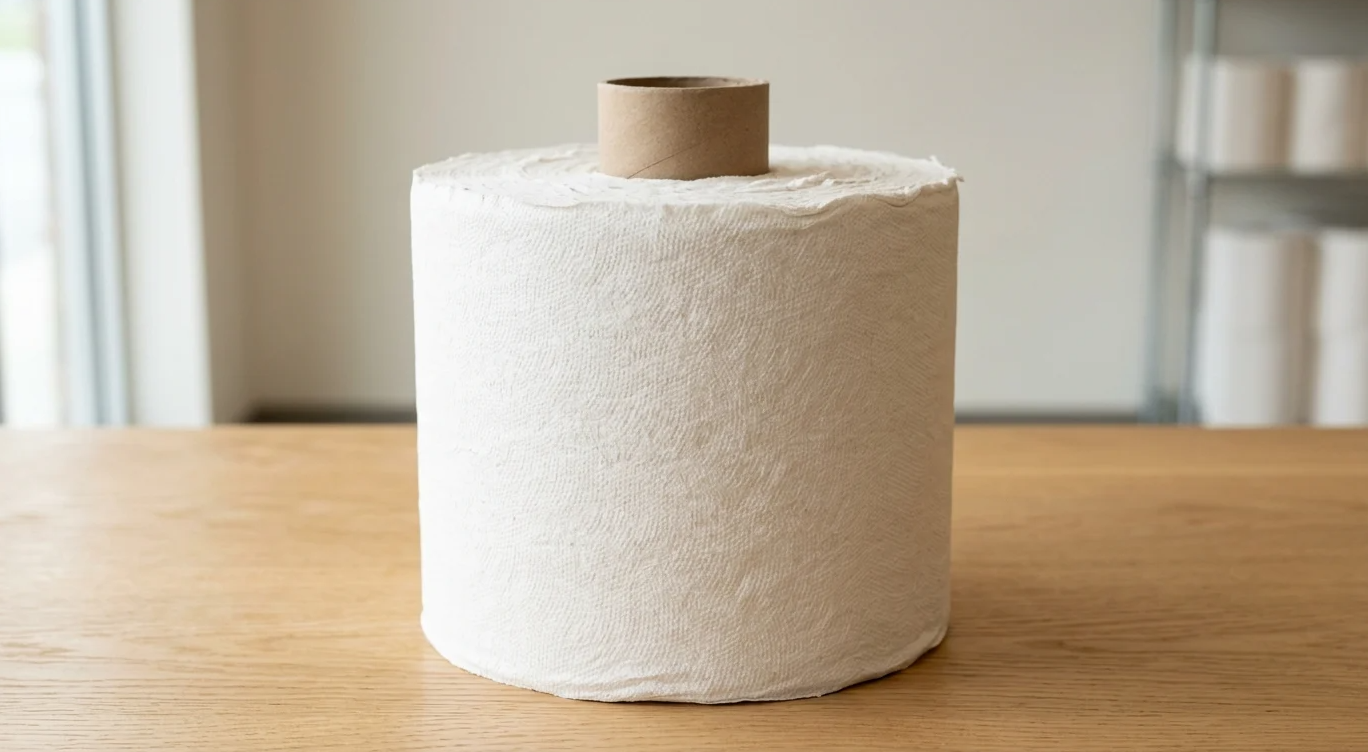
For restaurant groups and hospitality suppliers, napkins are not a small consumable—they are a high-volume operating input that affects cost, production efficiency, and guest perception. Buying parent rolls for converting can reduce packaging premiums and improve specification control, but only when the material is matched precisely to the napkin application. Food-contact compliance, roll geometry, tensile performance, softness, absorbency, and handling conditions all influence whether a shipment runs smoothly or creates expensive downtime. This guide explains the key specifications buyers should verify before ordering, especially when sourcing industrial napkin tissue rolls through a mill or converter partner.
Why Napkin Tissue Jumbo Roll Selection Matters for Restaurants
For fast-paced restaurant chains and hospitality suppliers, keeping up with the high daily demand for table napkins is a massive logistical challenge. Instead of buying finished, pre-packaged napkins at a premium, large restaurant groups and their tissue converter partners purchase the raw material directly. Direct jumbo-roll purchasing typically applies only to large-scale buyers with in-house converting capabilities or dedicated manufacturing partners, rather than individual restaurants. By using in-house converting lines or regional converter partners, these buyers can effectively manage costs, control paper quality, and streamline their supply chain. Crucially, napkin-grade rolls have strict, non-negotiable food-contact requirements (such as FDA or EU 1935/2004 compliance). Buyers must verify this documentation early in the sourcing process, often before physical trials begin.
What Is a Napkin Tissue Jumbo Roll?
A napkin tissue jumbo roll—often referred to in the industry as a parent roll—is a massive, industrial-grade spool of continuous tissue paper. It is critical to distinguish napkin-grade parent rolls from facial or toilet tissue parent rolls; napkin grades require specific softness profiles, tensile strength, and food-contact compliance, meaning buyers must always confirm the intended end-use grade with the mill. The roll serves as the blank canvas for everything from standard fast-food dispenser napkins to premium, cloth-like dinner napkins. Engineered specifically for high-efficiency B2B manufacturing, these rolls offer consistent quality, customizable specifications, and cost-effective logistics for tissue converters. While a facility might bring in a standard tissue paper jumbo roll for converting for bath tissue, napkin substrates require specialized handling. These rolls typically measure between 1,000 mm and 1,200 mm in diameter, though heavy-duty rolls can reach up to 3,000 mm to maximize continuous runtime on the factory floor.
Why Parent Roll Specifications Matter
Getting the technical specifications right is crucial for both the converter and the restaurant end-user. If a buyer orders a roll with the wrong tensile strength, inconsistent roll hardness, or poor slit-edge quality, it causes significant paper jams and web breaks in automated napkin-making machines, leading to costly downtime. Beyond the manufacturing floor, the end product lands in the customer’s hands. A flimsy, non-absorbent napkin reflects poorly on a restaurant’s brand, while a soft, durable one elevates the dining experience. By verifying the exact physical and chemical specifications before signing a purchase order, buyers ensure a smooth production run and a superior final product. Additionally, buyers must account for warehousing and handling requirements; these massive industrial rolls require climate-controlled storage to maintain moisture levels, specialized forklift access, and facilities that meet heavy floor load limits.
Key Napkin Tissue Jumbo Roll Specifications to Confirm
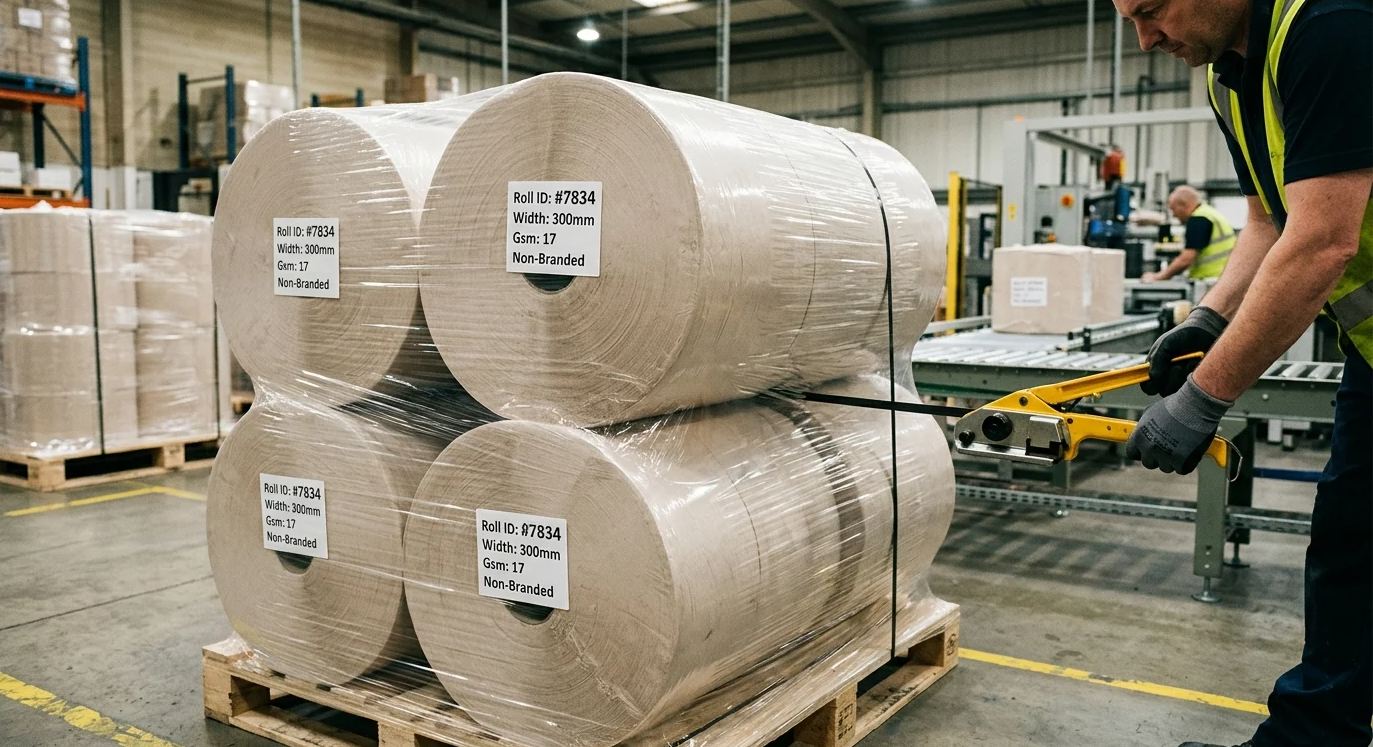
When negotiating with a paper mill, buyers must verify five strict technical parameters to ensure the jumbo roll fits their converting equipment and meets hospitality quality standards. Missing a single specification can result in a shipping container of unusable paper. All dimensional and mechanical ranges provided below are illustrative industry benchmarks; they must be verified against the buyer’s specific converting equipment manuals, as machine compatibility is strictly required.
Fiber Type, Basis Weight, Ply, and Softness
The fundamental feel, absorbency, and performance of a napkin depend on the first three of the five key specifications:
- 1. Fiber Composition: The choice between a virgin wood pulp tissue parent roll and recycled fibers dictates the baseline softness, liquid absorbency, and cost. This foundational choice aligns the raw material with the restaurant’s brand positioning and budget.
- 2. Basis Weight and Ply Configuration: Most standard restaurant napkins sit in the benchmark 13 to 18 grams per square meter (gsm) range per ply. Specialty luxury grades meant to mimic real linen can push up to 42 gsm in total basis weight for a heavier, more substantial feel. Depending on the target market, these rolls are configured in 1 to 4 plies. The right combination ensures the napkin maintains integrity during use.
- 3. Mechanical Properties and Moisture Content: The paper must survive the converting process. Buyers must confirm the tensile strength in both the machine direction (MD) and cross direction (CD), alongside optimal moisture content and unwinding tension compatibility, to prevent web breaks and machine downtime.
Roll Width, Diameter, Core Size, Embossing, and Printing
Physical dimensions and finishes round out the final two critical specifications:
- 4. Roll Dimensions and Core Size: The roll width must perfectly match the converting line’s intake, usually falling anywhere from 1,200 mm to over 2,500 mm. Roll diameters typically range from 1,000 mm to 3,000 mm, though these dimensions vary based on specific converting equipment. Furthermore, most industrial unwind stands require a standardized 3-inch (76 mm) core diameter; verifying this measurement prevents equipment loading failures.
- 5. Finish, Brightness, and Printability: Buyers must check if the roll is optimized for custom embossing and printing, essential for adding restaurant logos or textured finishes that improve grip. Additionally, verifying ISO brightness—typically benchmarked at 75% to 80% for recycled paper and 85% to 92% for virgin pulp—ensures the final aesthetic aligns with brand standards.
| Specification | Standard Restaurant Napkins | Premium/Specialty Napkins |
|---|---|---|
| 1. Fiber Composition | Recycled or blended fibers | 100% Virgin wood pulp |
| 2. Basis Weight & Ply | 13 – 18 gsm (1 – 2 ply) | 20 – 42 gsm (Total basis weight) |
| 3. Mechanical & Moisture | Standard MD/CD limits | High wet-strength optimized |
| 4. Dimensions & Core | 1,000 – 1,200 mm OD (76 mm core) | 1,500 – 3,000 mm OD (76 mm core) |
| 5. Finish & Brightness | 75% – 80% ISO, standard embossing | 85% – 92% ISO, custom print/embossing |
How Restaurant Buyers Should Source and Approve Rolls
Sourcing raw materials from overseas or domestic mills requires a solid, repeatable vetting process. Large restaurant buyers and their converting partners cannot afford to commit capital without equipment trials; they need a reliable system for testing and approving the paper before placing a massive order.
Key Takeaways
- Confirm food-contact compliance, such as FDA or EU 1935/2004 documentation, before trials or purchase orders are approved.
- Specify the napkin end use clearly because napkin-grade parent rolls differ from toilet and facial tissue rolls in strength, softness, absorbency, and compliance requirements.
- Match roll width, diameter, core size, and weight to the converting line, especially when using rolls around 1,000–1,200 mm or larger.
- Check tensile strength, roll hardness, and slit-edge quality to reduce web breaks, paper jams, waste, and production downtime.
- Plan warehousing and handling in advance because jumbo rolls require controlled storage conditions, forklift access, and floors rated for heavy industrial loads.
Frequently Asked Questions
Who should buy napkin tissue jumbo rolls?
They are best suited for restaurant chains, hospitality suppliers, and tissue converters with in-house converting equipment or established manufacturing partners, not individual restaurants buying ready-to-use napkins.
How is a napkin-grade parent roll different from toilet or facial tissue rolls?
Napkin grades must match food-service use, including specific softness, tensile strength, absorbency, and food-contact compliance. Buyers should confirm the intended napkin end use with the mill before ordering.
What food-contact documents should buyers request?
Request applicable food-contact declarations, such as FDA or EU 1935/2004 compliance, plus supporting mill documentation. These should be verified early, often before production trials begin.
Which roll dimensions must be confirmed before purchase?
Confirm roll width, diameter, core size, roll weight, and compatibility with converting equipment. Common diameters are around 1,000–1,200 mm, while heavy-duty rolls may be much larger.
Why do tensile strength and roll consistency matter?
Poor tensile strength, uneven hardness, or bad slit edges can cause web breaks, paper jams, and downtime on automated napkin-making machines, increasing waste and production cost.
Post time: Sep-11-2026