
Why PPWR Declarations Matter for Paper Packaging
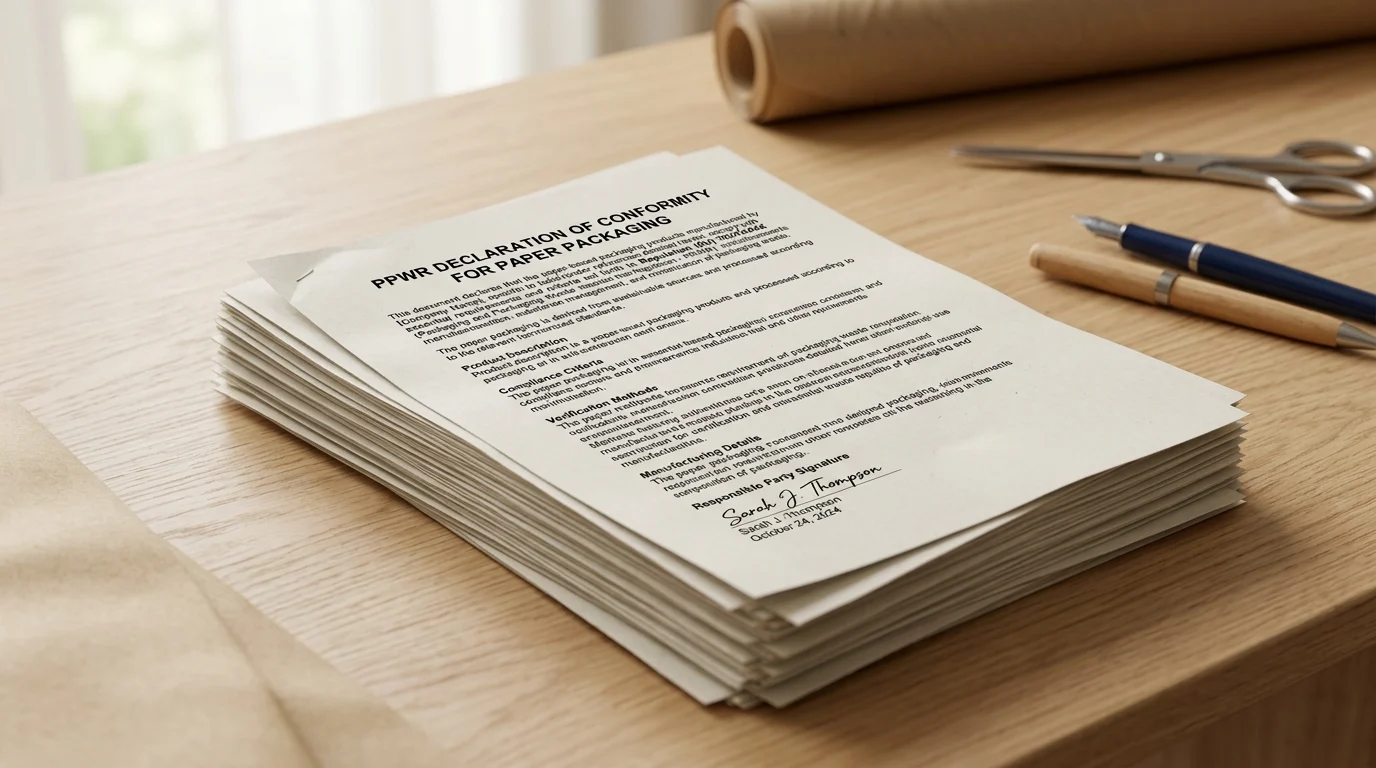
The EU Packaging and Packaging Waste Regulation (PPWR), officially Regulation (EU) 2025/40, is shaking up the paper packaging industry. By August 12, 2026, paper cup converters and brands placing packaging on the EU market must hold a formalized Declaration of Conformity (DoC). This isn’t just another sustainability badge; it is a mandatory legal passport for your products.
Commercial Risks of Missing or Weak Declarations
Failing to provide a valid DoC carries heavy commercial risks. Without this document, shipments can be blocked at EU borders, leaving standard minimum order quantities (MOQs) of 50,000 to 100,000 paper cups stranded in customs. Beyond logistical nightmares, non-compliant packaging faces market surveillance crackdowns, which can lead to forced product recalls and severe financial penalties.
Retailers and food-service brands are already updating their procurement contracts to shift liability onto converters. If your paper cups lack the proper PPWR paperwork, buyers will simply pivot to a compliant supplier, directly impacting your bottom line.
Key Definitions: Packaging, Manufacturer, and Conformity
Understanding who is responsible starts with three key definitions: packaging, manufacturer, and conformity. Under the PPWR, “packaging” covers everything from raw corrugated transport boxes to the final coated paper cups holding a morning coffee.
The “manufacturer” is not always the paper mill. If you are a converter buying Paper cup packaging base paper and shaping it into a finished cup under your own name or brand, the EU considers you the manufacturer. “Conformity” means you have actively assessed and proven that the finished packaging meets strict safety, minimization, and recyclability thresholds before it ever reaches a European café.
Evidence Needed for a PPWR Declaration of Conformity
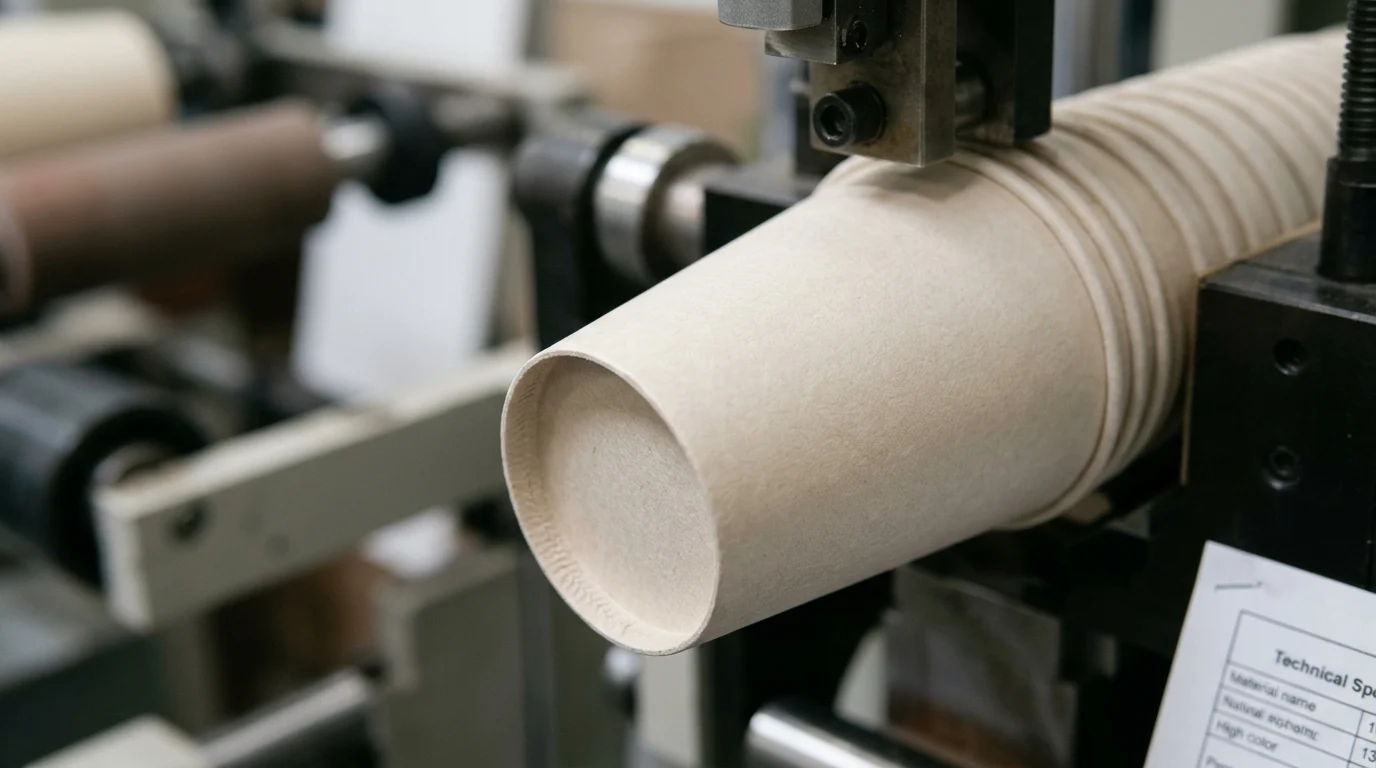
A PPWR Declaration of Conformity is only as strong as the technical documentation backing it up. You cannot simply sign a paper claiming your cups are eco-friendly; you need hard evidence organized into a highly specific format.
Required Annex VIII Declaration Fields
The EU requires the DoC to follow the Annex VIII model structure. This means every declaration must include specific fields: a unique product identification number, the manufacturer’s name and address, and a clear description of the packaging type (e.g., a “single-wall 8oz paper cup”).
It also requires a formal statement that the packaging complies with Regulation (EU) 2025/40, signed by a legally responsible person. Crucially, this document must link directly to traceable records—including product specifications, technical drawings, and material supplier declarations—ensuring complete transparency from raw pulp to finished cup.
Compliance Records for Articles 5–12
The real heavy lifting happens in proving compliance with Articles 5 through 12 of the PPWR. These articles mandate strict rules on substances of concern, packaging minimization, and recyclability. For food-contact paper packaging, converters must provide test reports showing compliance with restrictions on per- and polyfluoroalkyl substances (PFAS), often requiring concentration levels to be below 25 parts per million (ppm) depending on specific member state enforcement. You also need data proving that packaging weight and volume are reduced to the strict functional minimum.
| Compliance Area (Articles 5-12) | Previous Standard (General) | New PPWR Requirement (2026) |
|---|---|---|
| Substances of Concern | General REACH compliance | Strict PFAS limits (e.g., < 25 ppm) in food packaging |
| Packaging Minimization | Voluntary lightweighting | Mandatory weight/volume reduction to functional minimum |
| Recyclability | Theoretical recyclability | Design for recycling (DfR) with proven material recovery |
| Documentation | Basic supplier spec sheets | Full Annex VIII technical file & DoC |
How to Build and Maintain the Declaration
Getting your documentation ready for the August 2026 deadline isn’t an overnight task. Converters need to treat the PPWR DoC as a living system rather than a one-time paperwork exercise.
Gap Check for Existing Documentation
The first step is running a comprehensive gap check on your existing documentation. Most converters will find that their current material spec sheets and basic safety data sheets fall short of the PPWR’s rigorous demands. A thorough gap analysis typically takes 4 to 8 weeks, involving a deep dive into supplier declarations to ensure they cover the new recyclability and minimization metrics.
If your current pulp or coating suppliers cannot provide verifiable testing data for substances of concern, you have a critical compliance gap. Identifying these missing pieces early gives you the runway to either demand better data from your partners or source alternative, compliant materials before the deadline hits.
Workflow, Approval Criteria, and Updates
Once the gaps are closed, you need a robust workflow to generate and approve the DoCs. Approval criteria must require a complete technical file—including lab tests, minimization calculations, and supplier certificates—before any company officer signs the declaration.
Furthermore, compliance is not a “set it and forget it” process. If you change your coating formulation, switch base paper suppliers, or alter the cup’s dimensions by even 5%, the existing DoC becomes invalid. Both the technical documentation and the DoC must be updated to reflect these changes. Finally, regulatory authorities require you to retain these compliance records for 10 years after the last batch of that specific packaging is placed on the market. Consequently, secure and organized digital document management is absolutely essential.
Key Takeaways
- Paper cup converters placing packaging on the EU market should prepare a PPWR Declaration of Conformity before 12 August 2026.
- The converter, not always the paper mill, is treated as the manufacturer when it sells finished cups under its own name or brand.
- Each DoC should follow the Annex VIII structure and connect directly to traceable specifications, drawings, test reports, and supplier declarations.
- Technical files should address Articles 5–12, including substances of concern, packaging minimization, and recyclability requirements.
- Food-contact paper cup documentation should include PFAS and other substance-control evidence where applicable to EU and member-state enforcement.
- Converters should review supplier documentation early to avoid customs delays, customer contract disputes, and rejected EU shipments.
Frequently Asked Questions
What is a PPWR Declaration of Conformity for paper cups?
It is a formal document stating that finished paper cup packaging complies with Regulation (EU) 2025/40. For EU sales after 12 August 2026, converters need a DoC supported by technical files, supplier declarations, test reports, and traceable product specifications.
Who is responsible for the DoC: the paper mill or the converter?
The converter is usually responsible if it buys paper cup base paper and turns it into finished cups under its own name or brand. The paper mill should provide material data, but the finished packaging manufacturer must prove overall conformity.
What must be included in the Annex VIII DoC format?
The DoC should include product identification, manufacturer name and address, packaging description, a compliance statement for Regulation (EU) 2025/40, the responsible person’s signature, and links to supporting technical documentation.
What evidence supports PPWR compliance for food-contact paper cups?
Converters should keep material supplier declarations, specifications, drawings, weight-minimization data, recyclability evidence, and test reports for substances of concern, including PFAS where relevant under EU or member-state enforcement.
Can shipments be stopped without a valid DoC?
Yes. Missing or weak documentation can trigger customs delays, market surveillance actions, recalls, penalties, or rejected procurement by EU retailers and food-service buyers.
Post time: Nov-12-2026