
Why Food Grade Ivory Board Matters for Takeaway Packaging

When sourcing materials for the foodservice industry, the quality of your base paper can make or break a product line. Food grade ivory board is a premium, high-quality paperboard specifically engineered for direct and indirect food packaging. Manufactured from clean, reliable raw materials, it delivers the excellent stiffness and smooth surface performance that modern brands demand.
For wholesale buyers and packaging converters, the shift toward higher-end takeaway experiences means the structural integrity of the box is more important than ever. A flimsy or soggy container ruins the consumer experience and damages brand reputation. Choosing a reliable Food Package Ivory Board ensures that the packaging maintains its shape perfectly during storage, transit, and display.
Beyond just physical strength, this material is designed from the ground up with food-contact safety in mind. Distributors and converters who stock high-quality ivory board face fewer downstream complaints, enjoy smoother production runs, and can offer their clients a superior canvas for brand presentation.
Food safety and brand presentation drivers
Consumers eat with their eyes first, but in the B2B world, safety is the non-negotiable baseline. Food grade ivory board is manufactured under strict hygiene controls to prevent chemical migration and contamination. At the same time, its bright, fully bleached surface provides an ideal background for sharp graphics, vibrant logos, and the kind of premium presentation that helps fast-moving consumer goods stand out on retail shelves or in delivery bags.
Common takeaway packaging applications
You will find this versatile board working hard across the entire food sector. It is widely used to manufacture bakery boxes, confectionery packaging, dessert cartons, and sandwich wedges. Because of its reliable structural support, it is also a top choice for heavier takeaway meals, frozen food cartons, and specialized product inserts where both aesthetics and cleanliness are equally important.
Benefits for converters and packaging manufacturers
For packaging converters, runnability is everything. Food grade ivory board performs exceptionally well during cutting, folding, laminating, and die-cutting processes. Its consistent thickness and reliable strength prevent jamming and reduce waste on high-speed lines, ultimately improving production efficiency and boosting the converter’s bottom line.
Key Specifications Buyers Should Check First
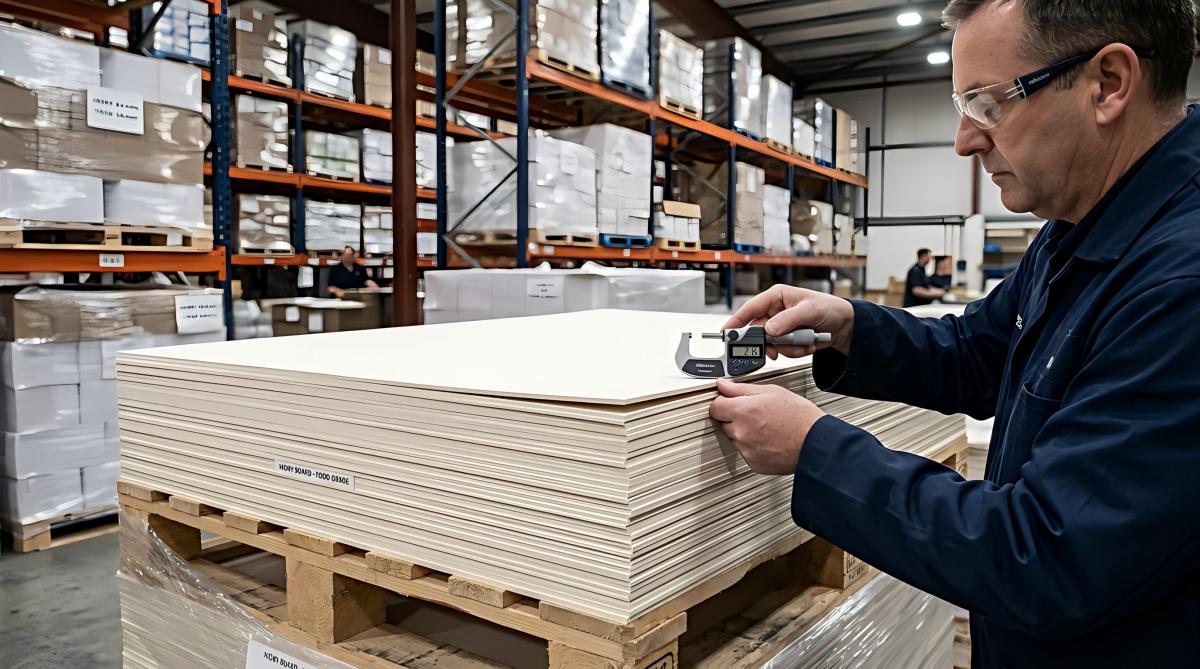
Before committing to a massive bulk order, procurement teams need to drill down into the technical spec sheets. Buying the wrong grade of paperboard can lead to disastrous production runs, wasted capital, and frustrated end-users. You have to know exactly what your converters and brands require.
It is not just about the weight of the paper; it is about how the board behaves under mechanical stress and environmental changes. You want consistent thickness, high bulk, and a surface that takes ink beautifully without smudging or offsetting.
Let’s look at the exact metrics and specifications that determine whether a batch of paperboard makes the cut for commercial food packaging applications.
GSM, thickness, stiffness, and surface quality
Grams per square meter (GSM) and thickness (caliper) dictate the board’s rigidity. A higher bulk board offers better stiffness at a lower weight, saving on material costs without sacrificing strength. Surface smoothness is also critical, as any micro-imperfections can disrupt the printing process.
| Application Type | Typical GSM Range | Key Requirement |
|---|---|---|
| Light Bakery Boxes | 200 – 250 GSM | Easy folding, vibrant print |
| Fast Food Clamshells | 250 – 300 GSM | Grease resistance (with coating), stiffness |
| Heavy Frozen Food Cartons | 300 – 350+ GSM | High rigidity, moisture resistance |
Printability, folding, and die-cutting performance
A premium ivory board must handle complex finishing techniques. Converters look for a board that doesn’t crack along the score lines when folded. Clean edges during die-cutting are also mandatory to prevent dust buildup in the packaging plant, which can compromise both print quality and food hygiene.
Application fit for direct and indirect food contact
You must verify if the board is intended for direct contact with wet or greasy foods, or just indirect contact (like an outer carton for a sealed bag). For direct contact with greasy items, the board often serves as a base layer that will be paired with a PE or water-based barrier coating to prevent the oils from soaking through.
Required Certifications and Compliance Documents
Navigating the maze of compliance is a daily reality for B2B wholesale buyers and importers. You simply cannot take a supplier’s word that their board is “food safe.” The documentation has to be bulletproof to protect your business and your clients.
Without the correct paperwork, your shipments can easily get flagged and held up at customs. Even worse, distributing non-compliant materials could trigger a massive product recall, severe fines, and irreparable damage to your business relationships.
Standardizing your document requests upfront saves everyone time. Here is what you need to look out for to ensure global compliance and seamless importing.
Food-contact compliance documents
Depending on your market, you will need specific declarations of compliance. For the US, this means FDA regulations regarding paper and paperboard in contact with aqueous and fatty foods. In Europe, buyers look for BfR recommendations and compliance with EC 1935/2004 frameworks, ensuring no harmful substances migrate into the food.
Quality, hygiene, and raw material certifications
Top-tier mills operate under strict Quality Management Systems (like ISO 9001) and Good Manufacturing Practices (GMP). Additionally, brands increasingly demand sustainability credentials, making FSC (Forest Stewardship Council) or PEFC certifications highly desirable for tracing the wood pulp back to responsibly managed forests.
How to verify test reports and traceability
Always ask for up-to-date Certificates of Analysis (COA) from reputable third-party testing labs like SGS, Intertek, or TÜV. Check that the batch numbers on the test reports match your shipping documents, ensuring full traceability from the paper mill all the way to the converter’s floor.
How Food Grade Ivory Board Compares with Alternatives
Wholesale buyers constantly weigh food grade ivory board against other substrates to optimize their packaging spend. When ordering thousands of metric tons a year, understanding the nuances between different materials is essential for managing your budget.
While standard recycled boards might look cheaper on a spreadsheet, they often fail the stringent hygiene tests required for direct food contact due to unknown mineral oils or chemical residues in the recycled pulp.
Understanding these material trade-offs helps distributors build a more profitable, reliable, and compliant product portfolio for their foodservice clients.
Comparison with folding box board and coated paperboard
Food grade ivory board is typically made from 100% virgin bleached chemical pulp, giving it a pure white appearance inside and out. Folding Box Board (FBB), on the other hand, often contains a middle layer of mechanical pulp, which makes it bulky but can give the unprinted side a yellowish tint. Standard coated paperboards might not carry the necessary food-grade certifications at all.
| Feature | Food Grade Ivory Board | Standard FBB | Recycled Paperboard |
|---|---|---|---|
| Pulp Source | 100% Virgin Bleached | Mixed (Chemical/Mechanical) | Post-consumer Recycled |
| Food Safety | Excellent (Direct Contact) | Good (Often Indirect) | Poor (Risk of migration) |
| Visual Appeal | Premium White | White top, cream/grey back | Grey/Brown |
Key criteria: safety, rigidity, print quality, and cost
Safety is always the primary filter. Once cleared, buyers balance rigidity and print quality against cost. Ivory board commands a slight premium over standard FBB, but its superior smoothness allows for high-end offset printing, making it the go-to for premium dessert and takeaway brands.
Impact on margins across foodservice and retail
Using the right board improves margins by reducing machine downtime and lowering the rate of defective boxes. When converters experience less cracking and warping on the production line, those efficiency savings are often passed down the supply chain, offsetting the initial premium price of the raw material.
How Procurement Teams Should Source Suppliers
Sourcing a reliable mill or wholesale supplier is about much more than just negotiating the lowest price per metric ton. The global paper market is volatile, and you need a partner who brings stability to your supply chain.
You need a manufacturer who can provide consistent batch-to-batch quality, handle complex export logistics, and scale up production to meet your seasonal volume demands without missing a beat.
A structured, rigorous qualification process prevents costly supply chain disruptions down the road and ensures you are partnering with a mill capable of long-term growth.
Supplier screening criteria
Start by evaluating the supplier’s production capacity, export history, and financial stability. A reputable mill should be transparent about their raw material sourcing and happy to share virtual or physical tours of their hygienic production environments and quality control labs.
MOQ, lead time, samples, and customization
Minimum Order Quantities (MOQs) for custom sizes usually range from 10 to 20 metric tons. Always clarify lead times, which can stretch from 4 to 8 weeks depending on the production schedule. Before ordering a full container, request A4 sheets or a trial Food Raw Material Paper Roll to test on your specific converting machinery.
Qualification steps before mass orders
Don’t skip the trial run. Have your converters test the samples for ink adhesion, fold cracking, and die-cutting cleanliness. Only after the trial batch passes both the mechanical tests and the compliance document review should you issue the purchase order for a mass production run.
Logistics Factors That Affect Landed Cost
The price quoted ex-works or FOB is only part of the story. Logistics, freight, and warehousing can easily eat up your profit margins if you aren’t carefully planning your shipments.
Paperboard is incredibly heavy and highly sensitive to environmental conditions like humidity and physical impact, making smart freight planning absolutely essential for international trade.
Let’s break down the hidden costs and best practices involved in shipping and storing commercial quantities of food grade base paper.
Sheet vs. reel format and palletization
Mills supply paperboard in either flat sheets or large reels. Reels are ideal for high-speed flexographic printing—much like how cupstock paper is processed—while sheets are standard for offset printing. Reels maximize container payload differently than palletized sheets, so work with your freight forwarder to optimize container space based on the format you choose.
Moisture protection, storage, and transport risks
Paperboard acts like a sponge. If exposed to high humidity during ocean transit, it will warp and cause massive feeding issues for the printer. Ensure your supplier uses heavy-duty kraft wrapping, stretch PE film, and robust edge protectors. Pallets must be heat-treated and fumigated for international shipping.
Inventory planning for seasonal demand
Foodservice demand spikes around holidays and summer festival seasons. Because ocean freight and production lead times can total up to 12 weeks, procurement teams must forecast demand accurately and hold adequate buffer stock in climate-controlled warehouses to avoid stockouts during peak periods.
Buyer FAQs and Final Selection Criteria
Even seasoned B2B importers run into specific, highly technical challenges when dialing in their packaging supply chain for the first time.
It helps to review some of the most common questions that pop up during the final supplier selection phase to ensure nothing falls through the cracks.
By addressing these final points, procurement teams can finalize their purchasing contracts with total confidence and clarity.
Direct contact, greasy food, and frozen food suitability
Uncoated ivory board is safe for dry food contact, but if you are packing greasy burgers or frozen meals, the board will need a functional barrier. You will typically buy the base ivory board and have it extruded with a PE, PLA, or water-based coating by the converter to provide the necessary grease and moisture resistance.
Documents needed for repeat orders
For repeat orders, you don’t need to re-qualify the whole factory, but you must demand a new Certificate of Analysis (COA) and a declaration of compliance for every specific batch. This ensures that the mill hasn’t quietly changed their pulp source or chemical additives between runs.
How to balance compliance, performance, MOQ, and margin
Finding the sweet spot takes experience. Don’t over-spec the GSM if a lighter, high-bulk board performs just as well. Consolidate your orders to meet higher MOQs for better pricing, but never compromise on food safety compliance—the risk to your margin from a single rejected container far outweighs the pennies saved on cheaper, uncertified board.
Related reading: cupstock paper
Key Takeaways
- Wholesale sourcing and supply-chain implications for Food grade ivory board
- Specifications, compliance, and commercial terms buyers should validate
- Actionable recommendations for distributors and procurement teams